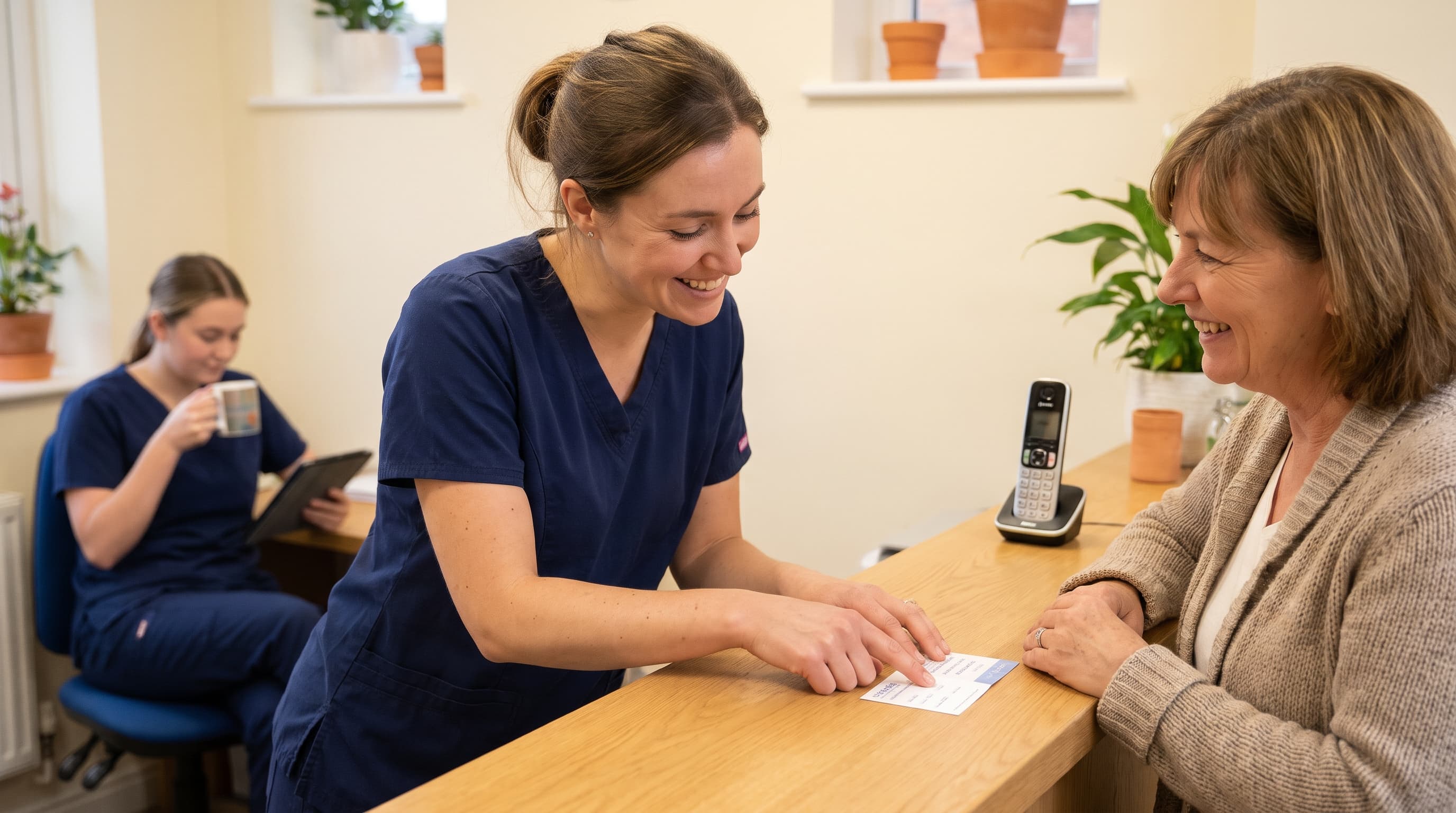
When dentists hear "AI receptionist," many picture a robot taking over the front desk. That isn't how the best practices use it. The front desk is often the most overloaded job in the office, and an AI receptionist works best as another set of hands for your team – not a replacement for it.
Here's why adding AI alongside your staff makes sense, and how to do it in a way your team will welcome.
Your front desk is doing too many jobs at once
In most dental offices, one or two people are expected to:
- Greet and check in patients
- Verify insurance and explain benefits
- Collect payments and set up payment plans
- Fill tomorrow's schedule and chase recalls
- Answer every phone call that comes in
Nobody can do all of that at the same moment. When a patient is standing at the desk and the phone rings, someone loses. Usually it's the caller.
The cost: nearly 1 in 3 calls goes unanswered
- Patient Prism analyzed 11.5 million calls to more than 8,000 dental locations in 2025. It found that 31 of every 100 calls were abandoned before the caller reached a person.
- CallRail's benchmark of 1.1 million calls puts the healthcare missed-call rate at 32%, the highest of any industry it measured.
Both companies sell call software, so treat these as benchmarks rather than an official industry figure.
This isn't because your team isn't working hard. It's because calls cluster at the worst times: first thing in the morning, at lunch, at the end of the day, and after hours, when nobody is there at all.
Hiring more people isn't always the answer
The obvious fix is another front-desk hire. But the American Dental Association's Health Policy Institute (ADA HPI) keeps reporting that dental practices struggle to recruit staff, including front-office staff. And even when you can hire, one more person still can't answer the phone at 9 p.m. on a Saturday, or take 5 calls at once on a Monday morning.
An AI receptionist fills exactly those gaps.
What changes when AI and your team work together
Think of it as splitting the work by what each does best.
| AI receptionist handles | Your team handles |
|---|---|
| Calls after hours, on weekends, and on holidays | Patients in the office |
| Overflow when everyone's busy | Treatment and financial conversations |
| Booking, confirming, and rescheduling | Upset or anxious patients |
| Common questions (hours, insurance, directions) | Insurance problems and billing disputes |
| Several calls at the same time | Anything the AI hands off |
The benefits of using both
Every call gets answered. No more voicemail at lunch, after hours, or during the morning rush. Callers who would have hung up and called the next practice get booked instead.
Your team gets time back for patients in the room. When the phone isn't constantly pulling them away, staff can give patients at the desk their full attention. That's the part of the visit people remember.
Less stress and burnout. Constant interruptions are one of the most draining parts of front-desk work. Taking routine calls off their plate makes the job more manageable, and that helps you keep good people.
Coverage when someone is out. Sick days, vacations, and turnover no longer mean a flood of missed calls.
Busy periods don't break the system. An AI receptionist can answer several calls at once, so a Monday morning rush or a recall campaign doesn't end in busy signals.
The same accurate answer every time. Patients get the same information about hours, insurance, and new-patient steps, no matter when they call.
Your team stays in control. The AI follows your scheduling rules, passes complex calls to staff, and sends a summary so patients don't have to repeat themselves.
When you'd still want a human
AI handles routine, repetitive calls well. Some conversations still need a person:
- Explaining treatment plans and costs
- Calming nervous or upset patients
- Handling dental emergencies under your protocol
- Sorting out complex insurance or billing issues
A good AI receptionist knows its limits and hands these calls to your team quickly. Ask any vendor how that handoff works before you sign.
How to introduce it to your staff
How you present the change matters.
Say clearly that it's support, not replacement. The goal is fewer missed calls and less phone pressure, not fewer people.
Involve them early. Your front desk knows the most common questions and the trickiest calls. Ask them to help set up the AI's answers.
Choose an owner. One team member reviews calls each week and suggests improvements.
Start with after hours. It's the easiest win, and nobody's job changes on day one.
Share the results. Show the team how many calls and bookings the AI picked up that would have been missed.
The bottom line
Your front desk is the heart of your practice, and they can't be in two places at once. Let the AI handle the routine calls and the empty hours. Your team handles the patients in the room.
Sources
- Patient Prism 2025 call data and CallRail benchmark, as reported by SEOD
- ADA HPI, State of the U.S. Dental Economy Q2 2025 (staffing)
See how much time it could give your team
VoxHealth is an AI receptionist built to work alongside your front desk. It answers every patient call 24/7, books and manages appointments, hands complex calls to your staff, is compliant with the Health Insurance Portability and Accountability Act (HIPAA), and can be live in under 24 hours.
Book a demo. It takes a few minutes, and your front desk doesn't have to do anything.